
Join scholars, students, and history enthusiasts from across the nation for our flagship gathering in the heart of Music City. Three days of groundbreaking panels, inspiring keynotes, and connections that shape careers.
Share your scholarship with peers and faculty from around the world in professionally organized panel sessions.
Connect with fellow members, faculty advisors, and academic leaders at exclusive receptions and meal events.
New this year — more diverse topics, roundtable discussions, and enhanced formats for engaging presentations.
Outstanding papers are eligible for prizes, book awards, and publication consideration in The Historian.
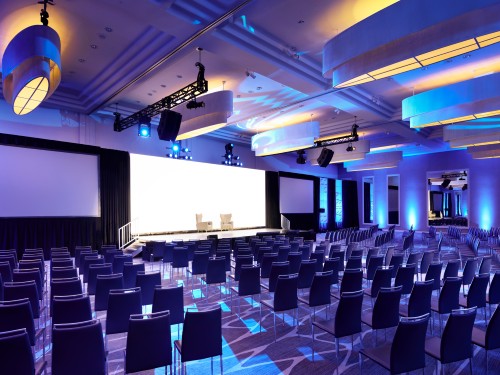
Register to attend, present your research, or both — it's all part of the same process. Standard registration is open now through October 1, 2026. Register today to secure your spot before late rates take effect.
Presenting a paper? You'll submit your abstract as part of the registration process.
Don't need to present? You can still attend panel sessions at no charge. Delegates receive Commemorative 2027 Biennial Gift.
A 28-story landmark in the heart of Music City — steps from Broadway, the Ryman Auditorium, and Nashville's best dining.
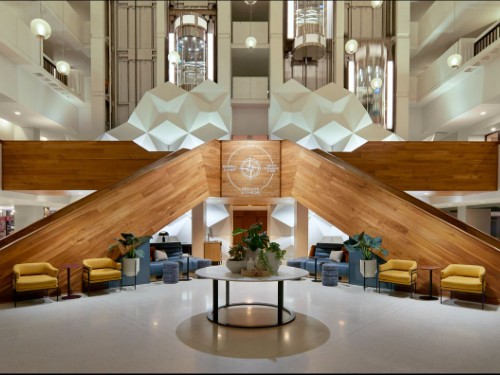
Retreat to elegantly redesigned rooms with luxury bedding, complimentary Wi-Fi, and stunning city views. Wind down at the rooftop Skye Lounge with craft cocktails and panoramic views of the Nashville skyline, or enjoy locally sourced cuisine with 50+ bourbons at the Library Bar. You're just a 6-minute walk from Broadway's legendary honky tonks.
Group name: Phi Alpha Theta Biennial Convention · Book by December 15, 2026
Every meal is an opportunity to connect. From cocktails at SKYE Lounge to the Presidential Banquet, these are the moments you'll remember.
All four events in one bundle — Opening Reception, Networking Breakfast, V.P. Lunch, and Presidential Banquet. Your easiest (and smartest) option.
Save when you bundleHors d'oeuvres and a complimentary drink at the stunning SKYE Lounge high above downtown Nashville.
An exclusive sit-down breakfast for members — designed to spark connections and collaborations.
A plated lunch featuring the Vice Presidential Address from Kyriakos Nalmpantis.
The marquee event. Full dinner, keynote from President Hosok O, awards, and lasting memories.
A full program of panels, networking, and Nashville experiences. Detailed session schedule available closer to the event.
Nashville is easy to get to and even easier to get around. Tap a card below for details.
Nashville International Airport (BNA) is just 8.5 miles away with multiple transport options to the hotel.
View airport detailsEasy interstate access from I-40 and I-65. On-site parking available starting at $55/night.
View directions & parkingBroadway is a 6-minute walk. The hotel offers bike rentals and a complimentary golf cart shuttle.
View local tipsNashville is far more than Music City. With roots stretching back to the Civil War and beyond, the city offers a wealth of historical sites and legendary nightlife — all near the Sheraton Grand.
137,000 sq ft of Tennessee history with some of the finest Civil War collections in the nation. Free admission.
Built as a tabernacle in 1892, home of the Grand Ole Opry. Tours, exhibits, and winter performances inside.
The largest inland stone fortification from the Civil War. Interactive exhibits, walking tours, and skyline views.
The world's only full-scale replica of the ancient temple, with a 42-foot Athena statue. Set in Centennial Park.
1,120-acre presidential estate with 30+ historic buildings, museum, and the stories of all who lived there.
Nashville's legendary Honky Tonk Highway — live music 10am to 3am, no cover charges, 365 days a year.
Nashville's best-kept secret — jazz clubs, speakeasies, and intimate live music just blocks from the hotel.
We invite submissions of original research on all topics in history. Undergraduate and graduate students, as well as faculty members, are encouraged to submit abstracts. Paper submission is part of the registration process — just select "presenting" when you register.
Located approximately 8.5 miles southeast of the Sheraton Grand Nashville Downtown. The drive typically takes 15–20 minutes. BNA is a major hub with direct flights from most U.S. cities.
Airport Address: 1 Terminal Drive, Nashville, TN 37214
Rideshare pickup is at the Ground Transportation Center, Level 1 of Terminal Garage 2. Taxis are available 24/7 outside baggage claim.
January is popular in Nashville. Book flights early and consider arriving January 5 to settle in before the convention begins on the 6th.
Take I-40 to Exit 209B (US-31/8th Ave S). Continue north on 8th Avenue, turn left onto Union Street. The Sheraton Grand is at 623 Union Street.
Take I-65 N to Exit 209A toward I-40 West/Downtown. Merge onto I-40 W briefly, then take Exit 209B (8th Ave S). Head north on 8th Avenue, turn left onto Union Street.
Take I-65 S into downtown. Take the James Robertson Pkwy exit. Follow James Robertson Parkway, turn right onto 6th Avenue N, then left onto Union Street.
Follow signs to I-40 West. Take I-40 W for approximately 6 miles. Take Exit 209B (US-31/8th Ave S). Head north, turn left onto Union Street.
The hotel is directly across from the Tennessee State Capitol. Use "623 Union Street, Nashville, TN 37219" in your GPS. Check SpotHero to compare and reserve nearby public parking in advance.
Bike Rentals: The Sheraton offers bicycle rentals so you can explore downtown Nashville at your own pace.
Golf Cart Shuttle: The hotel operates a complimentary golf cart shuttle service to Broadway and nearby attractions.
Nashville in January averages highs around 47°F (8°C) and lows near 29°F (−2°C). Pack layers and a warm coat for walking between venues. Business casual attire is suitable for all convention events.
Get the full conference dining experience in one convenient package. The Complete Meal Plan covers every meal event across all three days, from the Opening Reception at SKYE Lounge to the prestigious Presidential Banquet, so you can focus on the conference and never worry about missing a seat at the table.
Purchasing the meal plan saves you over ordering individual tickets and guarantees your spot at every event. All meal and drink tickets will be distributed at the registration desk upon check-in.
Kick off the 2027 Biennial Convention in style at the stunning SKYE Lounge, perched high above downtown Nashville with breathtaking panoramic views. Mingle with historians, scholars, and fellow members over a curated spread of hors d'oeuvres while making the connections that define every great conference.
Your ticket includes one complimentary drink to get the evening started right. All meal and drink tickets will be distributed at the registration desk upon check-in.
Start your morning surrounded by students and scholars who share your passion for history. This exclusive sit-down breakfast is designed to spark meaningful conversations and forge connections that extend well beyond the conference.
Whether you're exploring research collaborations, graduate opportunities, or simply meeting someone who gets excited about the same era you do, this is where it happens. Open exclusively to Phi Alpha Theta members.
Take a midday break from panels and presentations to enjoy a plated lunch alongside your fellow attendees while hearing from Phi Alpha Theta Vice President Kyriakos Nalmpantis.
Your ticket includes a full lunch and reserved seating for the address — a perfect opportunity to recharge, reflect on the morning's sessions, and gain fresh perspective from one of our society's leaders.
Close out the convention with the marquee event of the week. The Presidential Banquet is a full dinner experience featuring a keynote address from Phi Alpha Theta President Hosok O.
This is the evening where award recognitions, shared accomplishments, and lasting memories come together over an exceptional meal. If there's one event you don't want to miss, this is it.
The museum features six permanent exhibitions covering Natural History, First Peoples, Forging a Nation, The Civil War and Reconstruction, Change and Challenge, and Tennessee Transforms, taking visitors on a journey from the state's geological beginnings to the present day.
At 137,000 square feet, it houses some of the finest Civil War collections of uniforms, battle flags, and weapons in the nation. It's free, with free parking, and located right next to the Nashville Farmers' Market, which is a great spot to grab lunch afterward. A historian's paradise that won't cost a dime.
Built as a tabernacle in 1892, the Ryman hosted history-making performances and pop culture moments long before it became home to the Grand Ole Opry from 1943 to 1974. The self-guided tour includes an immersive theater experience, over 20 exhibits, and the chance to stand on the legendary stage for a souvenir photo.
During the winter months, the Grand Ole Opry Show actually takes place inside the Ryman Auditorium, so attendees could potentially catch a live show during the convention. This is the perfect "history meets fun" stop, right on Broadway.
The largest inland stone fortification constructed during the Civil War, Fort Negley is a historical education and outdoor recreation center. The stronghold was constructed by conscript laborers, both enslaved and free Black men, of stone, logs, earth, and railroad iron.
More than 2,700 African American men worked to build the fort, and only 300 were paid for their labor. The visitors center has interactive exhibits and informative videos, and the park offers self-guided walking tours with 20 interpretive panels. Just two miles from downtown and completely free. A must for Civil War scholars, and the hilltop offers great views of the Nashville skyline.
This art museum is the world's only full-scale and full-detail replica of ancient Greece's iconic temple, featuring a 42-foot statue of Athena. It was originally built for the Tennessee Centennial Exposition in 1897 and houses both permanent art collections and rotating exhibitions.
It sits in the beautiful Centennial Park, which is perfect for a winter stroll.
The Hermitage is one of the largest and most visited presidential homes in the United States and was recently named the number one historic house in Tennessee. The 1,120-acre National Historic Landmark features over 30 historic buildings and welcomes some 200,000 visitors annually.
Standard entry offers access to the mansion, its grounds, gardens, and museum, plus a viewing of the Jackson Presidency film. The estate also explores the lives of the enslaved community who lived and worked there, making it a richly layered experience for historians. About a 20-minute drive from downtown.
Nashville's Honky Tonk Highway is a row of legendary music venues pumping live music into the streets from 10am to 3am, 365 days a year. The best part? There's no cover charge at most venues. Just walk in, grab a drink, and enjoy world-class live music ranging from classic country and bluegrass to rock and soul.
Iconic venues like Tootsie's Orchid Lounge, Robert's Western World, and Legends Corner have launched the careers of countless artists, and you never know who might show up for an impromptu set. It's a short walk from the Sheraton Grand, so you can easily pop down for a couple of songs between conference sessions or make a full night of it. Bands play for tips, so bring some cash to show your appreciation.
If Broadway is the main stage, Printers Alley is Nashville's best-kept secret. Tucked just a couple of blocks from the hotel, this historic alleyway was once the hub of Nashville's printing industry before transforming into a legendary nightlife district in the 1940s.
Today, it's home to an eclectic mix of jazz clubs, blues bars, speakeasies, and intimate live music venues that draw more locals than tourists. Highlights include Bourbon Street Blues and Boogie Bar, which has hosted legends like B.B. King and James Brown, and Skull's Rainbow Room, a celebrated fine dining and jazz experience that originally opened in 1948. For a more relaxed, off-the-beaten-path evening with incredible music and great food, Printers Alley is the move.
All final papers must be submitted by November 13, 2026 to be considered for presentation. Abstracts and full papers are submitted through your registration portal after you register.
A national presentation strengthens grad school and job applications.
Refine your research with input from peers and faculty.
Outstanding papers are eligible for cash prizes and book awards.
Strong papers are considered for The Historian.
Connect with scholars, faculty, and grad programs.
Practice the conference skills you'll use your whole career.
Full formatting requirements, session formats, and roundtable guidelines will be sent to you after registration. Register early — panel slots fill on a rolling basis.
Phi Alpha Theta membership is the gateway to presenting at the Biennial. Find a chapter near you, then reach out to its Faculty Advisor about becoming a member. Once you're inducted, you're eligible to submit a paper and join us in Nashville.
Your gift helps fund scholarships and research grants for history students
The Historian welcomes manuscripts submitted from throughout the world, and from all regional, temporal and thematic fields of history. Submissions should be of interest to a wide readership. Manuscripts that have been published elsewhere, that are being considered for publication elsewhere, or that present themselves as op-ed pieces, will not be considered.
Manuscripts should normally be between 6,000 and 8,000 words, exclusive of footnotes. They are to be double-spaced, with one-inch margins (right margin unjustified). Submissions are expected to meet the highest standards of academic quality, have an original point, be in dialogue with all the relevant literature, and either be based on new source material, or constitute an exhaustive and critical overview of the historiography of a particular topic. They need to be written in flawless English. Please Americanize the English—e.g., “labor” rather than “labour,” “defense” rather than “defence,” “analyze” instead of “analyse”—except if the word(s) in question are part of a quote or title. Citations must be accurate and precise, indicating the sources of the argumentation, and must conform to The Chicago Manual of Style, latest edition.
We only publish original articles and do not publish translations of essays published previously in another language.
The Historian recognizes the expanding use of artificial intelligence (AI) by authors for their research. It is important, however, for those who submit their work for review to distinguish between AI used for assistive versus generative purposes, as well as what authors must disclose.
“Assistive” AI refers to tools that make suggestions to improve one’s work, including grammar, spelling, and translating one’s words into English. Authors need not disclose the use of AI for such purposes.
“Generative” AI refers to tools—among them large language models (LLMs), machine learning, and similar programs—that rewrite large portions of one’s manuscript; that produce source material or images; or that affect the ideas or conclusions presented. According to the policy of Taylor and Francis, which publishes The Historian, “Authors must clearly acknowledge within [an] article…any use of Generative AI tools through a statement that includes: the full name of the tool used (with version number), how it was used and the reason for use.” For The Historian, that acknowledgement must appear in a footnote. It is important to note that The Historian strongly discourages the use of AI for generative purposes and may disqualify a submission on that rationale alone.
Should the editor discover that a work submitted used any generative AI tools without disclosure, they reserve the right to reject that work at any point during the process of publication.
Authors are strongly encouraged to review Taylor and Francis’ AI policy, which can be found here: https://taylorandfrancis.com/our-policies/ai-policy/.
If a submission complies with the above requirements, usually specialists in fields relevant to the topic and holding the doctoral degree are selected to review the submission anonymously. The substance of these reports will be relayed to the author by the editor. On the basis of reviewer reports, the editor decides whether to proceed with publishing.
If your manuscript complies with the above requirements, please send one copy, in MSWord, as an e-mail attachment to historianeditor@phialphatheta.org. The author’s name should be included on the title page only. Authors should also send a one-hundred-word summary abstract of the article and their e-mail address(es).
Evaluation of manuscripts generally requires four to six months. We encourage inclusion of photographs, maps, and other illustrative material, which must be provided in camera-ready form, with authorization from copyright holders for these materials’ reproduction in The Historian. Manuscripts are edited for organization, clarity, and consistency.
Authors with any questions about The Historian’s policies are encouraged to contact the editor at historianeditor@phialphatheta.org.
Prefer a copy to keep? Download the full policy.
Download Policy (.odt)