
Meet the Historians Behind the Society
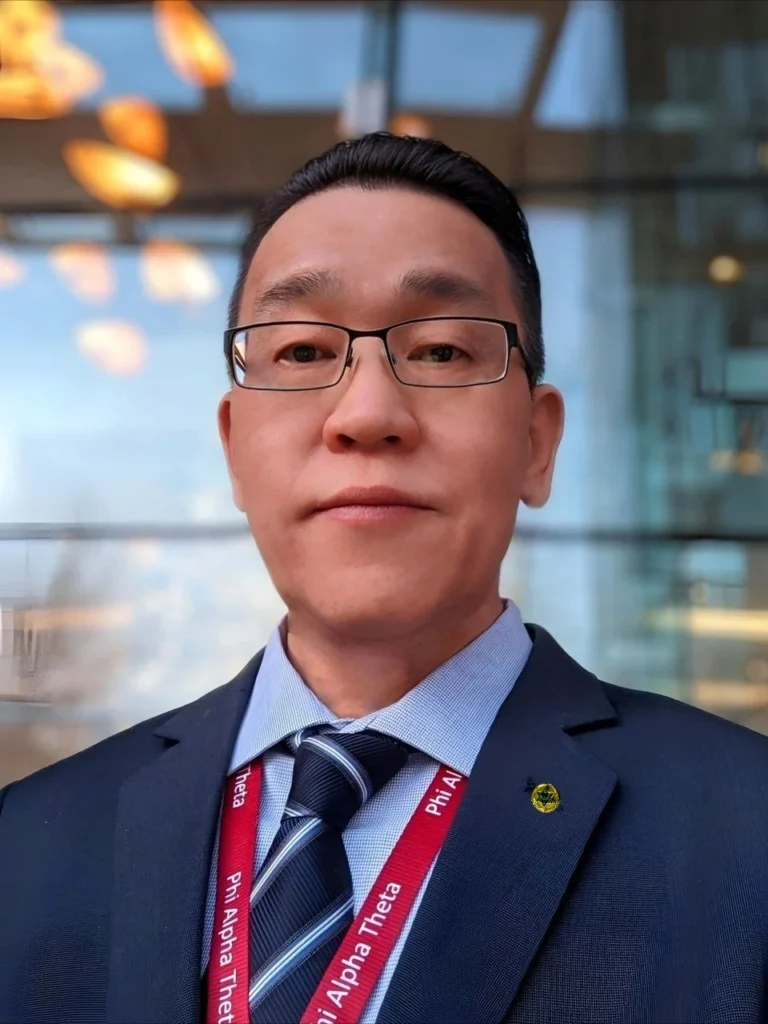
President
Dr. Hosok O is a Professor at Utah Tech University in St. George, specializing in East Asian history with a focus on Japan's social and intellectual development during the 19th and 20th centuries. He is currently engaged in three manuscripts aimed at enhancing understanding of this significant era. A committed member of the Phi Alpha Theta National History Honor Society, he has served in various leadership roles, including a term on the National Council from 2018 to 2019, and on the Advisory Board from 2020 to 2022. As Vice President until 2024 and currently President, he is dedicated to promoting the Society's mission and creating enriching experiences for its members. Outside of his academic pursuits, Dr. O enjoys exploring the breathtaking landscapes of Utah and engaging in outdoor activities. He is passionate about fostering a collaborative atmosphere within Phi Alpha Theta, inspiring fellow historians and students to connect deeply with history and its significance in our lives.
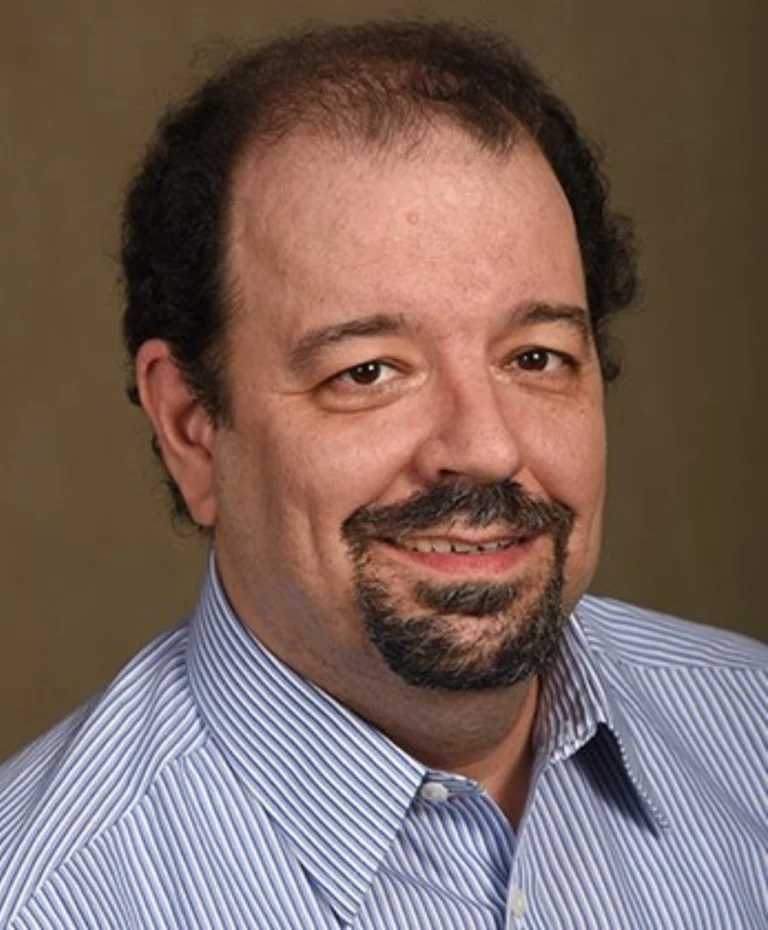
Vice President
Kyriakos Nalmpantis received his PhD from Kent State University in 2010. His dissertation, titled "Time on the Mountain: The Office of Strategic Services in Axis-Occupied Greece," dealing with the relationship between the Greek Resistance and American clandestine officers in World War II, won the biennial Iatrides Best Dissertation Award of the Modern Greek Studies Association in 2011. He is an Associate Professor of History and the chair of the history department at Baldwin Wallace University in Berea, Ohio. He has published articles on the political careers of major Greek Orthodox prelates in the Encyclopedia of Modern Christian Politics (Greenwood, 2006). He has been advisor and then co-advisor for the Delta Upsilon chapter of Phi Alpha Theta since 2016. In that capacity he organized a major regional conference in 2019 at Baldwin Wallace and was thereafter appointed the national representative for PAT in the region of Ohio. He served on the PAT National Council three years running (2019-2022), and subsequently on PAT’s National Advisory Board (2022-2024). He has also served as a member of PAT’s Scholarship Committee.
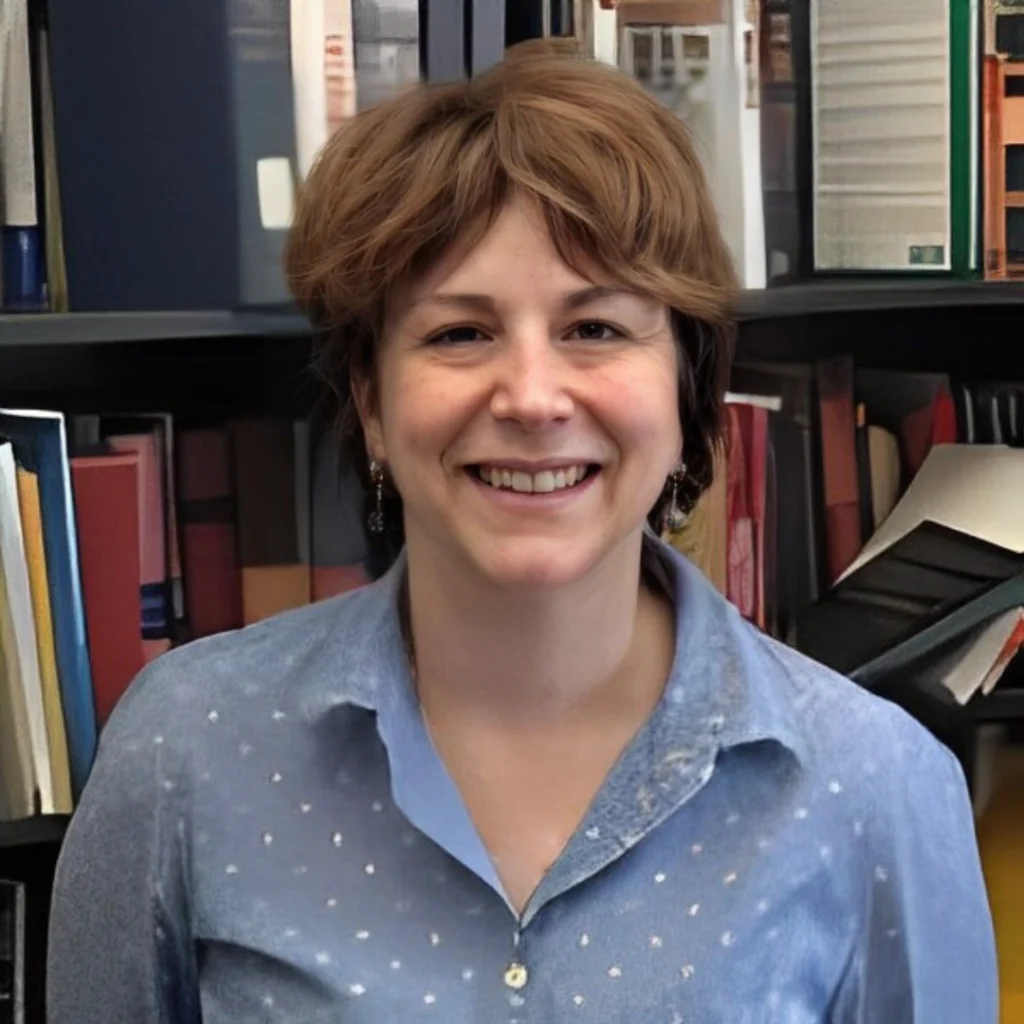
Advisory Board Chair
Debra A. Mulligan was born in Rhode Island and received her Master of Arts and Ph.D. in History from Providence College. She has taught a variety of courses in East Asian, European, and American history at Roger Williams University. She currently serves on the Board of Directors of the Rhode Island Heritage Hall of Fame, served as president of Phi Alpha Theta from 2023-2025, and was appointed as the PAT Advisory Board Chair in January 2025. Her publications include a chapter in the two-volume study: The Cultural History of Reading (Greenwood Press, 2009), Lexington Books: Chapter, “Soul Libertie and the Sons and Daughters of Eire,” in Narratives and Negotiations: Agency, Religion, and the State. Lexington Books, 2015, and articles in the Historical Journal of Massachusetts (Winter 2007), and the New England Journal of History. Her book, Democratic Repairman: The Political Life of James Howard McGrath [McFarland Press] published in May 2019.
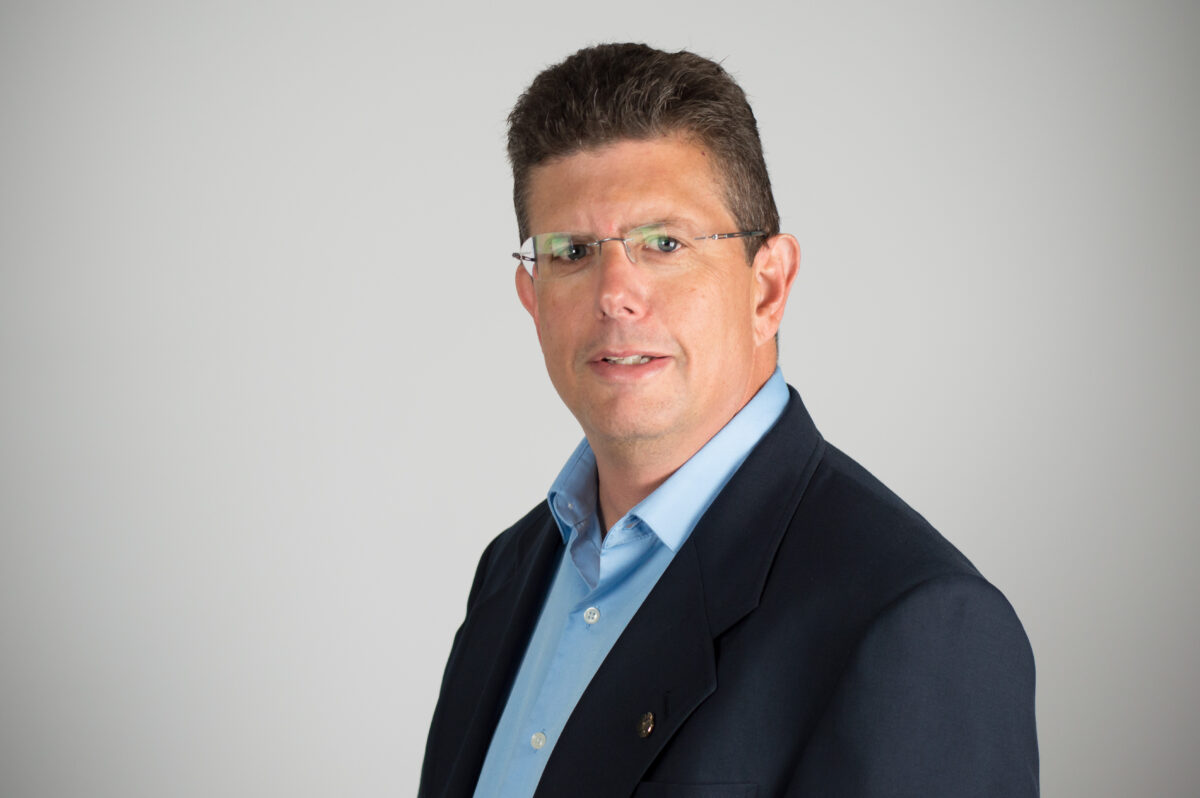
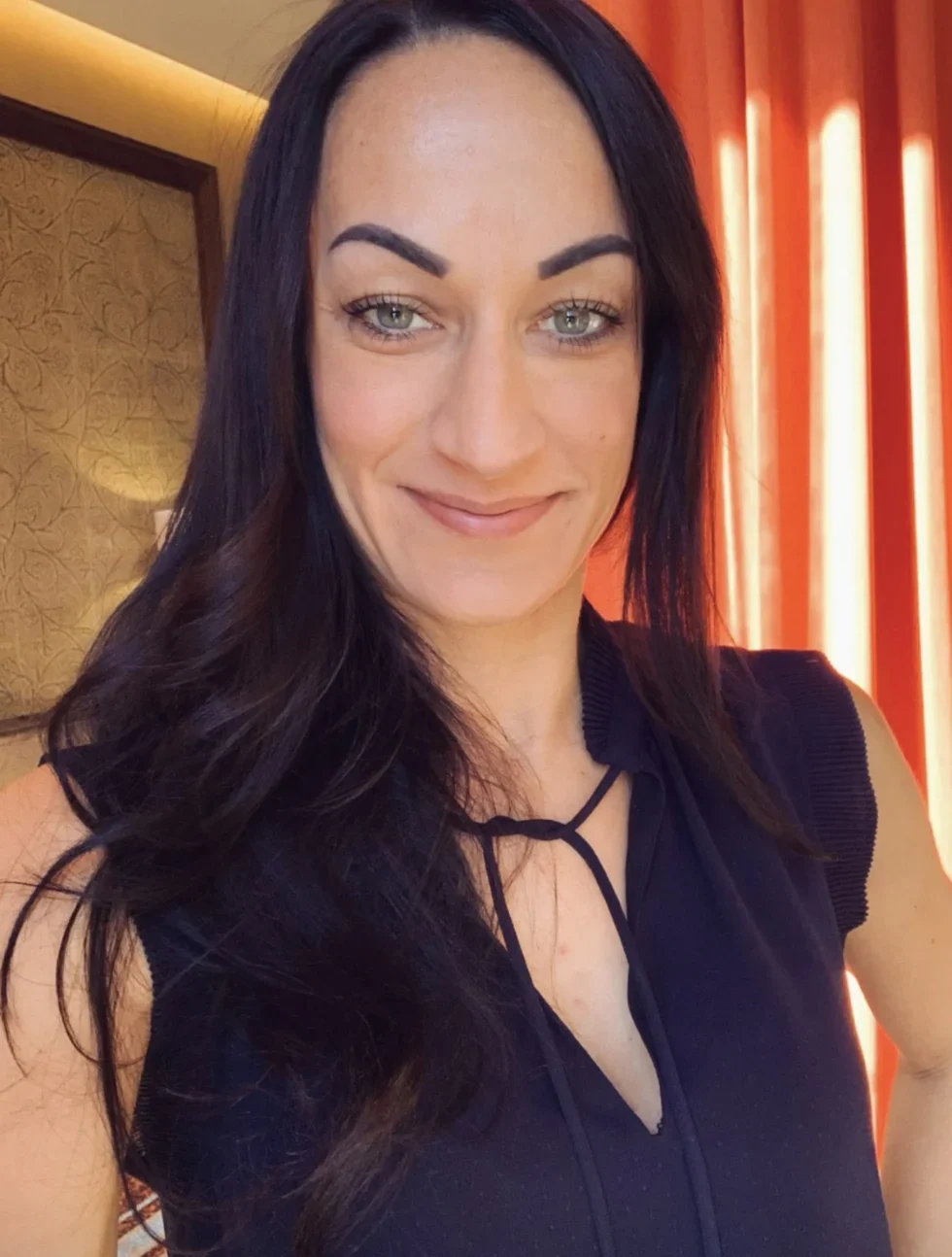
Chief Operations Officer
Operations Manager
The Historian welcomes manuscripts submitted by historians throughout the world and from all regional, temporal and thematic fields of history. Submissions should be of interest to a wide readership. Manuscripts that have been published elsewhere, that are being considered for publication elsewhere, or that present themselves as op-ed pieces, will not be considered.
Manuscripts should normally be between 6,000 and 8,000 words, exclusive of footnotes. They are to be double-spaced, with one-inch margins (right margin unjustified). Submissions are expected to meet the highest standards of academic quality, have an original point, be in dialogue with all the relevant literature, and either be based on new source material, or constitute an exhaustive and critical overview of the historiography of a particular topic. They need to be written in flawless English. Please Americanize the English—e.g., “labor” rather than “labour,” “defense” rather than “defence,” “analyze” instead of “analyse”—except if the word(s) in question are part of a quote or title. Citations must be accurate and precise, indicating the sources of the argumentation, and must conform to The Chicago Manual of Style, latest edition.
We only publish original articles and do not publish translations of essays published previously in another language.
The Historian recognizes the expanding use of artificial intelligence (AI) by authors for their research. It is important, however, for those who submit their work for review to distinguish between AI used for assistive versus generative purposes, as well as what authors must disclose.
“Assistive” AI refers to tools that make suggestions to improve one’s work, including grammar, spelling, and translating one’s words into English. Authors need not disclose the use of AI for such purposes.
“Generative” AI refers to tools—among them large language models (LLMs), machine learning, and similar programs—that rewrite large portions of one’s manuscript; that produce source material or images; or that affect the ideas or conclusions presented. According to the policy of Taylor and Francis, which publishes The Historian, “Authors must clearly acknowledge within [an] article…any use of Generative AI tools through a statement that includes: the full name of the tool used (with version number), how it was used and the reason for use.” For The Historian, that acknowledgement must appear in a footnote. It is important to note that The Historian strongly discourages the use of AI for generative purposes and may disqualify a submission on that rationale alone.
Should the editor discover that a work submitted used any generative AI tools without disclosure, they reserve the right to reject that work at any point during the process of publication.
Authors are strongly encouraged to review Taylor and Francis’ AI policy, which can be found here: https://taylorandfrancis.com/our-policies/ai-policy/.
If a submission complies with the above requirements, usually specialists in fields relevant to the topic and holding the doctoral degree are selected to review the submission anonymously. The substance of these reports will be relayed to the author by the editor. On the basis of reviewer reports, the editor decides whether to proceed with publishing.
If your manuscript complies with the above requirements, please send one copy, in MSWord, as an e-mail attachment to historianeditor@phialphatheta.org. The author’s name should be included on the title page only. Authors should also send a one-hundred-word summary abstract of the article and their e-mail address(es).
Evaluation of manuscripts generally requires four to six months. We encourage inclusion of photographs, maps, and other illustrative material, which must be provided in camera-ready form, with authorization from copyright holders for these materials’ reproduction in The Historian. Manuscripts are edited for organization, clarity, and consistency.
Authors with any questions about The Historian’s policies are encouraged to contact the editor at historianeditor@phialphatheta.org.
Prefer a copy to keep? Download the full policy.
Download Policy (.odt)